
Let Them Finish
In November of 2018, Arthur Vance played a cassette his father had kept locked away for thirty-seven years. His father had been a night-freight pilot. The label gave a date, a route, and three words written underneath in blue ink: "Let them finish."
There were two voices on the recording. Arthur recognized his father's immediately. The other spoke slowly, with long spaces between words that made it difficult to tell whether a sentence had ended. His father waited through those silences before answering.
That was the detail Arthur couldn't parse. Not the unfamiliar voice, nor his father's claim that it had originated from something flying alongside his aircraft. It was the answer—how quickly it came, and how little explanation his father seemed to need before giving it. Everett Vance died believing that somewhere, someone might still be acting on what he had said that night. He had never told his son what it was.
Arthur found the cassette while clearing out a steel cabinet in his father's garage outside of Denver. Everett was seventy-eight when he died, fourteen years into retirement. Most of the cabinet held things Arthur expected: flight logs, maintenance invoices, and photographs of twin-engine aircraft resting on wet concrete. But the cassette was hidden inside a tobacco tin wrapped in a folded square of oilcloth. Arthur remembered that tin. At sixteen, looking for cash his father sometimes kept in the garage, he had lifted its lid. Everett had taken it from him before he could see inside. There had been no shouting; his father simply sat down beside him on the workbench and said, "That belongs to somebody who hasn't come back yet."
Arthur assumed he meant a dead friend—pilots had those. Thirty-one years later, he found the key taped beneath the cabinet's bottom drawer.
The materials eventually reached me through a retired local historian named Eleanor Hayes. Arthur had approached her about preserving his father's aviation papers. She copied the cassette, then asked whether he understood what he was asking her to keep. What she sent me was the audio transfer, photographs of the tin and tape, and eleven handwritten pages dated February 2009.
Everett had written those pages after a dicey surgical operation, when he apparently thought he might not get another opportunity. He recovered, put the pages away, and said nothing for another nine years.
The date on the cassette was October 17th, 1981.
At the time, Everett was forty-one, flying small loads between rural airstrips across Kansas and eastern Colorado. He wasn't an airline captain. There were no passengers to reassure, no cabin crew, and usually nobody in the copilot's seat. He carried machine parts, medical supplies, legal documents—whatever needed to arrive before sunrise. That night, he was returning east with an empty aircraft.
He had taken to carrying a small cassette recorder, switching it on through portions of the flight to capture radio exchanges he wanted to review afterward. The microphone picked up the cockpit speaker, his voice, and a considerable amount of engine drone. It was his own setup, not an official flight recorder. He explains this in the first of the handwritten pages, spending nearly as much space describing the recorder as he does the thing outside his window. For a long time, he appears to have believed that getting the ordinary details right might make the rest easier to tell.
He first noticed the light off his left wing a little after 10:00 PM. It was low and steady, roughly where he might expect another aircraft at a distance. He watched it between instrument checks. No obvious approach, no crossing movement. When his heading changed, its position beside him barely altered. He radioed ground control to ask about nearby traffic.
The surviving cassette contains his question and a reply from air traffic control that does not identify any aircraft beside him. That is not a complete record of what anyone on the ground could see; we have only what reached this recorder, in this cockpit, on a tape whose history rests with one family.
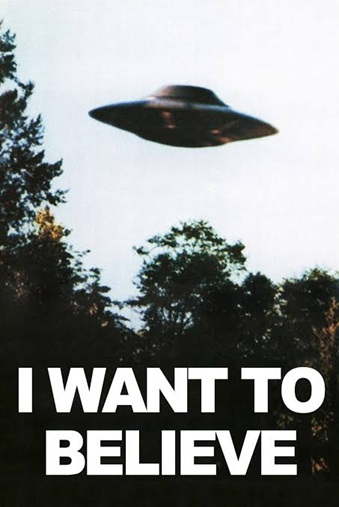
Still, Everett kept watching the light. He wrote that it went out without leaving him in darkness—something remained visible against the stars. It was a broad, shallow shape, dark beneath and faintly pale along one edge. He couldn't decide whether he was looking at an edge reflecting light or an opening with light behind it. Then a smaller shape moved across the pale section: a head, he thought, too large above a narrow set of shoulders. It turned toward his aircraft. He could make out two dark areas where eyes would have been.
That is the entire visual description. He gives no height, no skin texture, no hands pressed against glass. At that distance, through his own window, he wouldn't claim to see them.
Arthur asked me whether the voice on the tape sounded alien. I told him I didn't know what an alien was supposed to sound like. The voice is low, faint beneath the engine, but understandable. There is no electronic distortion, no theatrical echo. If anything, its ordinariness makes it more difficult to place; you keep expecting it to identify itself as another pilot or someone on the ground.
It never does.
The first clear words are, "You are going home."
Everett gives his destination, then his call sign. Then he asks the speaker to identify itself. A pause follows, the engine humming through the silence.
"There are others."
Everett asks where. The reply is obscured. On the written pages, he supplies a word he believed he heard, but the tape doesn't support choosing that word over several others, so I have left it out. Then the voice says something clear enough to follow without a transcript:
"They ask us the same thing."
Everett asks, "What thing?"
"To go home."
Before we go further, there is a distinction here that matters. Everett's account of a shape outside the aircraft was written twenty-seven years after the flight. The conversation itself is preserved on the cassette. Those are separate kinds of material, and neither can simply authenticate the other.
The flight log has an entry for that route on that date. A payment record places Everett with the operator that autumn. Arthur even recognized the recorder from an old family photograph. These details establish an ordinary setting in which a recording could have been made, but they cannot establish who made the second voice.
Eleanor had the tape transferred by an audio technician who repaired vintage equipment. He found no obvious physical splices in the cassette. He did not certify its contents, however—and a recording needn't contain a physical cut to contain a performance. Everett could have recorded a staged conversation with another person, or someone could have transmitted a radio prank. The date on a label can be written at any time.
Arthur knew all of that. He had come looking for an explanation of his father, not a certificate of authenticity for the cassette. What troubled him was that the man answering on the tape sounded exactly like the father he'd known when something practical needed doing. His attention narrowed; his questions became immediate. Whatever was happening outside the window, Everett was trying to understand what the speaker needed from him.
The voice says, "There are differences now."
Everett asks whether it means injuries.
"Some were small when they came."
In his written account, Everett states this was when he stopped thinking about another aircraft in trouble. He looked at the empty seat beside him. His son Arthur was ten at the time. Arthur had wanted to come along that evening, but Everett had promised him a short flight the following weekend instead.
Then comes the question the family argued over after playing the tape:
"Which of them can come home?" the voice asks.
"All of them." No request for names. No questions about nationality, what had happened, or how long these people had been missing.
"All of them?" The voice pauses again. "You would not know some of them."
Everett counters, "Their people would."
This is where Arthur stopped the player the first time. His father's second answer was hauntingly familiar. He had heard a version of it before, spoken about a photograph that had hung beside the telephone throughout his childhood: a young man in a leather flying jacket, standing with one hand on an aircraft door. Everett's older brother, Julian.
Julian had disappeared on a private flight in 1969. Searchers found neither him nor his aircraft. Everett had helped with the search, and after the organized effort ended, he kept calling farmhouses along the route, asking whether anything had been found during planting, fence repairs, or a walk along a creek bed. Arthur was born two years later. He never met his uncle; he knew him only through that photograph and his father's habit of correcting anyone who used the word dead.
As a child, Arthur had asked how anyone could recognize Julian if he came back old. His father told him, "His people would."
The phrase on the cassette wasn't a sudden inspiration. It belonged to an argument Everett had already been having with himself for twelve years.
Consider what that does to the recording. It gives his answer a human explanation, but it also gives us a reason to be cautious. If Everett invented this conversation or misunderstood something he heard, he had an extraordinarily personal motive to imagine missing people waiting to return. His brother's absence could explain why he fabricated the story—or it could explain why he answered the way he did.
On the tape, the other voice continues, "Their people are gone."
Everett doesn't answer immediately this time. His handwriting becomes jagged on the page describing that moment. A sentence begins about the flight instruments, is crossed out, and starts again with the empty seat. He writes that he finally understood the voice wasn't necessarily talking about people who had been missing for a few months, or even a few years. There was simply nobody left to recognize them.
"Then somebody else will have to meet them," Everett says.
The voice asks, "You can say this for the others?"
Everett's reply is quieter. "No, I can only say it for me."
That is the exchange: a question about who may return, an answer without conditions, and then the quiet confession that the man giving it has no authority beyond himself.
There are a few more words on the tape. Everett asks whether the speaker has a man named Julian Vance. He spells the surname. The voice does not answer directly, saying only, "There is room."
Everett asks, "Where?"
Nothing intelligible follows—only engine noise, a faint click, and Everett repeating his question before calling ground control again.
According to his written pages, the pale edge outside his window drew farther away until he could no longer distinguish it from the night. He landed, tied down the aircraft, sat in his car with the recorder on the passenger seat, and replayed the exchange twice before driving home.
He never describes missing time.
He never claims his brother appeared.
Nothing came aboard.
What followed was, to the outside world, an uneventful flying career. But inside the family, Arthur remembered something else: his father taking him to airfields on days when neither of them was flying, sitting near the arrivals area to watch people come through the gates. Everett would point out that you could often tell who was being met before the waiting person even raised a hand. Someone would stand up. A face would change.
Arthur had always thought his father simply liked airports. In the years after finding the cassette, he wondered whether Everett had been studying what happened at the end of a journey—how strangers became someone's people the moment recognition took hold.
I asked Arthur whether his father ever connected those airfield visits to Julian.
"Sometimes. Not always." It was a small answer, but a wise one; it keeps us from turning every ordinary afternoon into evidence.
There is one other document in the material Eleanor sent: a letter written to Everett in 1993 by another pilot, Harlan Finch. Everett had apparently written him after hearing that Finch had reported an unusual radio exchange years earlier. Finch's letter describes being asked whether an airfield would accept arrivals after dark. No aircraft identified itself. Finch replied with ordinary runway details, but the speaker asked again, using the word people where Finch expected to hear aircraft.
That is as far as the comparison goes. There is no recording, no description of a craft, no surviving copy of Everett's initial letter. We cannot know how much of Everett's story Finch had already heard, but Finch's letter had been folded open to one paragraph so often that the paper was splitting along the crease:
"I thought they wanted permission to land. Looking back, I don't think that was what they asked."
Everett had underlined permission.
Permission from whom? A pilot carrying freight? A man sitting alone at a radio? What would make either one a person who could decide whether someone else belonged here?
This is the difficulty I have with treating the cassette simply as a tale of otherworldly visitors. Most of the exchange concerns people who are already absent—people whose families may have died, or who might return so changed that recognition is no longer possible.
Changed how? Everett never details it, though age alone would account for some of it. A child taken away and returned decades later as an adult would be a stranger to anyone expecting the child. Decades can erase a household, a town, every soul who knew a name. But the voice asks which of them can come home as though the sheer length of an absence might render someone ineligible.
And what if recognition required something beyond navigating time? What if living somewhere else altered what a person needed, how they spoke, or what a human eye would see when looking at them? Would a family connection still be enough? Would memory? Would saying they were from here settle anything if no one remained to confirm it?
Everett had no way to answer those questions. He hadn't even asked them before saying, "All of them."
Arthur told me that, for a while, this made him angry. His father had spent thirty-seven years concealing something he apparently considered important enough to answer on everyone else's behalf.
Then I reached the last page of Everett's account:
"I said 'No' when they asked if I could speak for the others. I have wondered ever since whether that was the answer they kept."
"Don't mistake it for the end. Let them finish."
Everett had spent decades replaying the spaces between the voice's sentences, listening for something he had interrupted—something that might have followed if he hadn't supplied an answer so quickly. Arthur found no record of a second encounter, no further messages. Just a man returning to the same few minutes of tape, forever uncertain which of his words had mattered.
I cannot tell you that the cassette records an intelligence from elsewhere. It could preserve a hoax, a private performance, or a bereaved man's attempt to give his brother's disappearance a place to land. The material doesn't eliminate those possibilities, nor does it prove that Julian was among the subjects being discussed. Everett asked; the voice never confirmed it.
Yet within the account Everett left, the question was never whether anyone wanted to come back. They had already asked for that. The question was whether we would have them.
I think about the confidence of his first answer and the limit he admitted to a few moments later: "No, I can only say it for me."
How far apart those statements are. How much of a world sits between wanting someone welcomed and being able to promise that they will be. Was the voice seeking instructions, or testing an assumption? Had someone tried to return before? Was there room aboard something Everett couldn't see—or room here that its passengers were afraid to claim?
And if an answer was carried away into the night, which answer was it?
Arthur still has the cassette. He replaced the cracked plastic case, but he kept the original labeled J-card. When he plays it now, he lets the tape run through the long, silent gap after his father asks where there is room.
He knows the exact length of that gap. He knows what comes after it.
He waits anyway.